

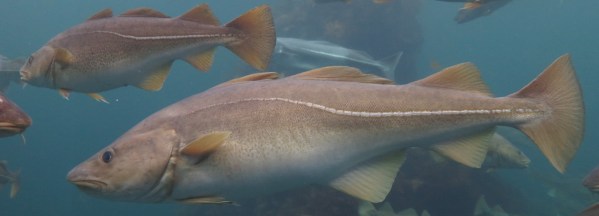
This is the second part of a two-part blog series exploring controversial changes in the Scottish Government’s approach to a seasonal fishing closure to protect spawning cod in the Firth of Clyde.
The first blog looked at how decisions about the 2022-23 closure were made in the context of the Scottish Government’s commitment to ‘co-management’ of fisheries.
This blog will examine the evidence base used to inform the Scottish Government’s approach, and its commitment to learn lessons following stakeholder and parliamentary scrutiny of the 2022-23 closure.
Before exploring these themes, this blog will begin by setting out the policy context for the Scottish Government’s use of scientific evidence in fisheries management.
The ‘best available science’
The Scottish Government has frequently repeated the phrase – “best available” when asked about the scientific evidence base for its approach to the seasonal closure.
The use of this phrase mirrors Scottish Ministers’ legal obligation under the Fisheries Act 2020 (s.1(5)(c)) requiring that “the management of fish and aquaculture activities is based on the best available scientific advice” (emphasis added).
What does “best available” mean in practice? The Future Fisheries Management Strategy 2020-2030 states that the Scottish Government “will always take an evidence-based approach” by “fully utilising the data and knowledge available at all levels” (emphasis added).
It also commits to “seek to build on our evidence base, particularly where there are gaps in our current knowledge” and “a fit for purpose monitoring programme and collection of data” (emphasis added).
More recently the Marine Science and Innovation Strategy states that “policies and plans are informed by science, evidence and advice that’s continuously improving and innovating”.
The statements emphasised above provide a basis for testing if the evidence used by the Scottish Government was the “best available” as defined by its policy commitments.
Criticism of the 2022 evidence base
As covered in the first part of this blog series, the most significant and controversial change to recent seasonal closures was the removal of longstanding exemptions for scallop dredge, creel and prawn trawling vessels to protect spawning cod from disturbance during the spawning season.
The scientific rationale for this change was provided in a letter to the Rural Affairs and Islands (RAI) Committee from the Scottish Government’s Chief Fisheries advisor, Dr Coby Needle in March 2022. The letter emphasised evidence reviewed by the Scottish Government which demonstrated that the territorial behaviour of spawning cod close to the seabed makes them vulnerable to fishing activity (see graphic below).

Appearing before the RAI Committee a day later, Dr Needle acknowledged that there “remains a lack of data and observation that are specific to the Clyde area” and that therefore they were taking a “risk-based approach”.
But was this “risk-based” focus on minimising disturbance to spawning cod the right approach and informed by the “best available” science?
Stakeholders identified two key areas of concern about this risk-based approach:
- It failed to account for the greater impact that mobile fishing methods (bottom-trawling and dredging) have on the seabed compared to static methods (‘creeling’ using pots and traps and diving).
- It did not consider evidence that wider factors may be preventing the recovery of cod such as unintended catches (‘bycatch’) of cod caught by prawn trawlers.
It’s worth considering these points in more detail.
Does creeling and diving cause disturbance to spawning cod?
The evidence provided by Dr Coby Needle acknowledged that diving and creeling was less impactful than dredging but argued that it “seems reasonable to assume that a creel landing on a lek [mating territory] or a diver working in the vicinity of spawning will be likely to interfere with spawning activity”.
Counter to this, correspondence from academic researchers to the RAI Committee argued that, in the studies cited by Dr Needle, “[n]o evidence is provided to suggest that deployment of creels is likely to disturb cod mating behaviour to any significant extent.”
Marine Directorate research published in 2015 also recognises the relative impacts of different fishing methods, stating that “whilst all gear is damaging, per kg of nephrops [prawns] or scallops landed, mobile gear has a greater physical impact on habitat, produces more by-catch, more discards and causes greater reductions in geodiversity, biodiversity and the biomass of benthic [seabed] species”.
Stakeholders also expressed concerns that smaller creel vessels would be disproportionately impacted as they are less able to travel outside the closure area due to increased fuel costs and safety concerns when fishing in poor weather.
The Scottish Government’s Business and Regulatory Impact Assessment for the 2024-25 closure confirms that “[w]hile some vessels may be able to move into other grounds, other vessels may struggle to do so, particularly smaller vessels during this part of the year due to bad weather and competition for space with other established users on new grounds.”
It could be further argued that not differentiating according to these criteria conflicts with commitments made by the Scottish Government and other UK administrations to incentivise “the use of fishing techniques and vessels that have a reduced impact on the environment” when considering the distribution of fishing opportunities (Joint Fisheries Statement para. 4.2.1.30).
Taking this evidence into account, could exemptions have been tailored to the different economic and environmental impacts of these fishing methods? One potential barrier to a tailored approach may be tensions stemming from long-established and ongoing conflicts between fishers in the Clyde (and elsewhere) using static and mobile fishing equipment. If this factor has contributed to the Scottish Government’s reluctance to vary exemptions accordingly, it has not been clearly articulated.
In any case, the chosen approach, focussing on disturbance to spawning cod, may be only part of the picture. This is because other factors may be more important in preventing the recovery of the Clyde cod stock.
Is bycatch preventing cod recovery?
A notable omission from the “best available” science cited in the Scottish Government’s evidence review is research that identifies unintended catches of cod (‘bycatch’) by prawn trawl vessels as a key factor preventing recovery of the Clyde cod stock.
For example, a 2010 study examining historic changes in Clyde fisheries concluded that “continued intensive bottom trawling for Nephrops with fine mesh nets will prevent the recovery of other species [in the Clyde]”.
This factor was also highlighted in written evidence to the RAI Committee provided by academic researchers which stated:
“Discarded by-catch of cod in the Nephrops trawl fishery appears, on face value, to be a potentially significant factor that could be limiting recovery of the stock. Cod by-catch is a very small proportion of the Nephrops catch weight, but appears to be a potentially significant fraction of the cod stock biomass”.
This submission identified that a stock assessment led by the University of Strathclyde and co-supervised by Marine Directorate scientists would provide more evidence on this issue.
Senior Marine Directorate Officials appearing before the RAI Committee on 9 March 2022 acknowledged the potential value of this research. Dr Coby Needle explained that the assessment “will enable a quantitative evaluation of the progress of any Clyde cod recovery, which previously has not been possible”. Allan Gibb, the Marine Directorate Head of Sea Fisheries also described the research as “a really positive step forward”.
Researchers at the University of Strathclyde have shared some of the results of this stock assessment with SPICe. The stock assessment is based on data from annual research vessel surveys and fishery landings and discard data collected since 1990 by the Scottish Government’s Marine Directorate.
The charts below show some of the key results from this stock assessment which indicate that bycatch of cod in prawn trawls may be significant. For example, they demonstrate that, although cod bycatch makes up a small fraction by weight of trawl catches relative to prawns (e.g., 2% of the weight of prawns in 2019), these unintended catches represent a high proportion of the remaining Clyde cod stock (e.g. 39% in 2019).

The research also indicates that the rate at which cod are being caught as bycatch is far above the key fisheries reference point for sustainably managing the stock, which scientists refer to as ‘Fmsy’. Fmsy is the mortality rate due to fishing (F) which generates the maximum long term average catch (Maximum Sustainable Yield – MSY). Exceeding Fmsy is considered overfishing. The Strathclyde stock assessment estimated Fmsy for Clyde cod to be 0.32 which is consistent with the International Council for the Exploration of the Sea (ICES) stock assessments for cod in the wider west of Scotland and North Sea.
For Clyde cod, fishing at Fmsy is equivalent to catching 27% of the total number of fish from this specific stock per year. The Strathclyde assessment indicates that fishing mortality has fluctuated between around 1.5 and 2.5 since 1990 (see the chart below). A fishing mortality of 2 is equivalent to catching 86% of the fish from the total cod stock each year.
Put simply, the stock assessment indicates that overfishing of cod has likely occurred each year since at least 1990.

As mentioned in the first blog,the Cabinet Secretary accepted that the Scottish Government’s approach to the 2022 seasonal closure had been “far from ideal” and committed to “foster greater collaboration” and “learn the lessons from this process, so that we are not in a similar situation again”.
Stakeholder evidence received by the RAI Committee, and the University of Strathclyde stock assessment provided a good foundation to improve the evidence base for developing proposals for the next seasonal closure in 2024-25.
Given the Marine Directorate’s involvement in the University of Strathclyde research, it seems unlikely that the Scottish Government would be unaware of its key finding that “mortality resulting from the Nephrops fishery is a significant factor in the lack of recovery of the whitefish stocks in the Firth of Clyde.”
If the University of Strathclyde stock assessment stands up to scrutiny, its key findings suggest a need for action to reduce bycatch in the prawn trawl fleet as well as, or even instead of, focussing on reducing disturbance to spawning cod. This poses a difficult fisheries management problem that intersects with wider debates about the need to manage fisheries according to the relative environmental impacts of different fishing methods.
Were lessons learned after the 2022 closure?
Legislation for the 2024-25 Clyde seasonal closure provided an opportunity to scrutinise whether the Scottish Government had learned lessons from the process around the 2022-23 closure.
Correspondence from the Scottish Government detailing its approach to the 2024-25 seasonal closure repeated the same evidence used to support the 2022-2023 closure. It stated that “the best available scientific evidence shows that any activity within 10 metres of the seabed can cause disturbance to spawning cod” adding that “[n]o new evidence has been presented and so we are confident that we are basing our policy on the best available science” (SPICe emphasis). There was no mention of the University of Strathclyde stock assessment that officials had spoken positively about in 2022.
Approach to the use of unpublished research
When quizzed by the RAI Committee about the stock assessment, Dr Coby Needle said:
“The research has not yet been published […] so there has been no external or internal peer review of the model. Therefore, I would argue that we remain in a position of not having a Clyde-specific stock assessment for cod.”
Regardless of its peer-review status, it’s not clear why officials omitted any mention of this research in the evidence review for the 2023-24 closure given that it is part-funded by the Marine Directorate, using Marine Directorate data and co-supervised by Marine Directorate scientists.
The decision not to consider this research on the basis it had not been peer-reviewed could be regarded as inconsistent with the Marine Directorate’s use of a separate, unpublished research cited in the Scottish Government’s consultation on the 2022-23 seasonal closure (para. 11) which was interpreted as providing evidence that “the closure is in the right place at the right time”.
This research, undertaken by the Scottish Oceans Institute (SOI) and Clyde Fishermen’s Association (CFA), became a source of controversy during the 2022-23 closure after stakeholders were refused access to a copy of the study on the basis that it was still in draft, despite the consultation document stating it could be requested from the CFA.
The Sustainable Inshore Fisheries Trust (SIFT) referred its request to the Scottish Information Commissioner which ruled that the Scottish Government had failed to comply with Environmental Information Regulations and had not been entitled to refuse to make the draft report available.
The foreword to the SOI/CFA research report states that the study had been internally peer-reviewed by Marine Directorate Scientists who identified “a number of survey design problems” and “a lack of important detail on how the surveys were conducted”.
The SOI/CFA research report was eventually published, with the Scottish Government commenting that the report “should not have been referred to in the Firth of Clyde cod closure consultation document” and “contain quite limited information which would not have altered the overall policy decision”.
Anecdotal evidence and conflicting statements
During an evidence session on 9 March 2022, the RAI Committee questioned the Cabinet Secretary and Marine Directorate officials on what evidence had been reviewed to justify the removal of exemptions for creelers and divers.
Responding to the question, Allan Gibb, Marine Directorate Head of Sea Fisheries referred to anecdotal evidence stating “[o]ne of the correspondents claimed that, in his estimate, there were between 4,000 and 5,000 creels in that area. If 4,000 to 5,000 creels are being hauled up and shot down every day, that will clearly generate disturbance”.
In November 2023, the Marine Directorate responded to an information request under Environmental Information Regulations querying the creel figures quoted by Allan Gibb during the March 2022 evidence session. It explained the figures provided were from a news article in the Campbeltown Courier published on 21 January 2022. However, Marine Directorate provided data in its response showing that in 2022, the average number of pots hauled daily by all Scottish vessels in the Clyde cod closure area was 315 and that no individual vessel recorded hauling more than 2,000 pots in any one day.
Two years later, in an evidence session with the RAI Committee on 28 February 2024, Allan Gibb repeated the anecdotal figures from the Campbeltown Courier article and further speculated on the number of creels being deployed in the closure area stating “[i]n my personal opinion, it is bound to be a staggering number”.
Distinction of the Clyde cod stock
Officials also gave conflicting statements about whether cod in the Clyde could be considered as a distinct stock different from cod stocks in neighbouring marine regions.
Allan Gibb said “[t]here is no stand-alone Clyde set of stocks and species; they are part of the broader west of Scotland stock. They come and go […]. Therefore, the idea of managing Clyde stocks in the Clyde is not right”.
He further regarded questions about the distinction of the Clyde cod stock as “irrelevant in terms of the objective [of the seasonal closure]”.
These statements contradicted an earlier letter from the Scottish Government to the RAI Committee on 8 February 2024 which referenced a report by the International Council for the Exploration of the Sea (ICES) stating that “the best scientific evidence indicates that […] Clyde cod are very likely to be a distinct stock”.
It also appears to be at odds with Dr Coby Needle’s assessment provided in March 2022 when he stated “Clyde cod represents a relatively discrete substock of the wider West of Scotland population, and shows sufficient genetic and physiological distinctiveness to suggest that it is a closed, self-sustaining population”.
This apparent wavering in stance on the distinctiveness of the Clyde cod suggests that the objective of the seasonal closure may have shifted from recovering cod in the Clyde to wider recovery of cod in the West of Scotland population.
However, the fact that the best available science indicates a distinct Clyde cod stock seems fundamental to evaluating the effectiveness of the management approach. This is because effective monitoring and assessment of the stock should enable the ability to determine evidence of recovery and therefore the ability to take an evidence-based approach.
It is also key to ensuring transparency so that fishers in the Clyde and wider marine stakeholders can see that the measures taken are contributing to a recovering stock, and a healthier Clyde marine ecosystem.
At present, the lack of robust data to evaluate the effectiveness of the closure appears to have resulted in the “similar situation” the Cabinet Secretary sought to avoid after the 2022-23 seasonal closure. This situation has resulted in a policy limbo best described in the Scottish Government’s BRIA for the 2023-24 seasonal closure which states:
“There remains no definitive scientific evidence that cod stocks in the Clyde closure area have significantly improved as a result of the closure. The Marine Directorate accepts that additional scientific data gathering in the Clyde region would be beneficial, yet under current resource constraints this is not possible. The precautionary principle is therefore the approach taken.”
What conclusions can be drawn from all this?
There appear to continue to be questions around commitments to “fully utilising the data and knowledge available at all levels” and learn lessons from previous seasonal closures.
There also seems to have been inconsistency as to whether or when unpublished scientific evidence, or anecdotal evidence, has been used. Moreover, there appears some inconsistency on whether the Clyde cod stock is considered distinct or not – with resultant questions around whether the policy focus remains singularly in the Clyde, or across a wider geographical area.
These inconsistencies seem to be creating confusion and ambiguity over the purpose of the seasonal closure – and uncertainty around whether and how there can be a move from a precautionary approach to one more evidence-based.
The bigger picture
Why does the Scottish Government’s handling of a seasonal fishing closure matter? There are direct impacts on those fishers affected by the closure and the Clyde marine environment. But more broadly, the approach taken may reflect the Marine Directorate’s acknowledgement of “resource constraints” limiting capacity for fisheries science, particularly in inshore fisheries.
Furthermore, uncertainty and a lack of consistency surrounding the application of key scientific evidence leaves unresolved questions around the quality of the evidence base for the management approach and trust in the evidence previously provided to the RAI Committee.
Future consideration of the Scottish Government’s approach to the Clyde seasonal closure could seek clear answers about whether recovering Clyde cod remains the defining policy objective, and explore whether the Scottish Government delivers on commitments to build its evidence base and address gaps in its knowledge to assess the effectiveness of its approach.
Damon Davies, Researcher, SPICe
Title image by GRID-Arendal on Flickr