
The Scottish Government’s draft Climate Change Plan (CCP) was published on 6 November 2025, initiating 120 days of Parliamentary scrutiny. During this period, the Net Zero, Energy and Transport (NZET) Committee has led cross-committee scrutiny of the draft CCP, with support from nine other committees. This collaborative approach reflects the Conveners Group Session 6 strategic priority to strengthen cross-cutting scrutiny of climate change and net zero.
The Scottish Parliament’s debate on the draft Climate Change Plan (CCP) will take place on 5 March 2026. Ahead of this, this blog looks at recurrent themes across scrutiny. It has been produced by Dr Kirsten Jenkins, Senior Lecturer in Energy, Environment and Society at the University of Edinburgh and current Adviser on climate change and net zero targets to the Net Zero, Energy and Transport Committee. As with all guest blogs, what follows are the views of the author and not those of SPICe, or of the Scottish Parliament.
For more blogs on other topics relating to the draft CCP, visit the SPICe Hub on the draft Climate Change Plan.
Cross-committee scrutiny
Throughout the scrutiny period, a thematic analysis was undertaken to understand overarching themes across committee scrutiny. The thematic analysis primarily draws from committee reports and letters, alongside oral evidence.
NZET published their report on 27 February 2026. In its report, NZET took into account all the reports and letters it had received from other committees:
- Rural Affairs and Islands Committee (RAI) report
- Local Government, Housing and Planning Committee report (LGHP) report
- Economy and Fair Work Committee (EFW) letter
- Health, Social Care and Sport Committee (HSCS) letter
- Criminal Justice Committee (CJC) letter
- Citizen Participation and Public Petitions Committee (CPPP) letter
- Constitution, Europe, External Affairs and Culture Committee (CEEAC) letter
- Social Justice and Social Security Committee (SJSS) letter
- Public Audit Committee (PAC) letter.
Since NZET published its report, the HSCS Committee published its report on the draft Plan on 3 March 2026.
Cross-cutting themes
Governance and delivery
The need for effective governance structures to enable delivery of the CCP appeared as a dominant theme across evidence to NZET, PAC, LGHP, EFW, HSCS and RAI – and it is notable that the draft CCP has no dedicated governance section. Across evidence, witnesses often welcomed the ambition of the draft Plan, but noted a lack of clear delivery mechanisms, and expressed a lack of confidence in delivery of the CCP in the context of past under-delivery, back-loaded action and limited near‑term milestones. In one NZET evidence session, this was summarised as a lack of detail around the ‘who’, ‘what’, ‘where’, ‘how’ and ‘when’ of policy delivery.
The NZET report concluded that the CCP “must be first about delivery” and that it “falls short in some areas as a delivery document, with insufficient detail on key policies and the mechanisms to achieve specific outcomes.” The HSCS Committee called for stronger governance and accountability mechanisms within the Plan. Governance and delivery concerns also appeared through sector-specific lenses. For example, the LGHP Committee’s report referred to the need “for a detailed delivery framework – a ‘routemap’ – to give clarity to local authorities.”
Integration between strategies, timelines and policy sequencing
Across the EFW, LGHP, NZET, PAC and RAI Committee’s evidence, there was a clear theme on the need for integration between Government strategies and policies, timelines and policy sequencing to be set out more clearly – including attention to the knock-on implications of policy delays. For example, the EFW Committee recommended that the draft CCP “needs to be clearer on the relative priority of actions to ensure there is a managed transition.”
The NZET report highlights gaps and delays to interrelated Scottish Government plans, programmes and strategies, including the Energy and Just Transition Plan, Rural Support Plan and Heat in Building Strategy and Delivery Plan. The LGHP Committee refers to the delays to bring forward legislation on heat in buildings, highlighting evidence from witnesses that this has put at risk the attainment of net zero targets, and created significant uncertainty for the housing sector and homeowners. The RAI Committee stated that they couldn’t come to a conclusion on the emissions reductions pathway in the draft Plan without clarity on the agricultural reform programme.
The HSCS Committee called for health outcomes and impacts on health inequalities to be made more explicit in the Plan, and for these to be integrated into policy appraisal and budget decisions, and for the role of food in meeting climate and health objectives to be set out more clearly.
Monitoring and early-warning indicators
Monitoring and evaluation is covered in a previous SPICe blog, and was a key theme from NZET’s proactive scrutiny engaging with auditors and regulators on what a ‘good’ CCP would look like. This highlighted that an effective framework was essential to support scrutiny of progress and highlight risks to delivery early enough to enable the Scottish Government to take effective corrective action.
The HSCS, LGHP, NZET, PAC and RAI Committees all considered the need for monitoring and evaluation. In its report, NZET recommended that the Scottish Government should publish the early warning indicators as soon as possible, and consider developing an indicators-based “dashboard” as a transparent and accessible way of communicating net zero progress to the public. The HSCS Committee called for clear indicators of health, wellbeing and equity impacts alongside emissions outcomes, that reflect place‑based variation, so that co-benefits and risks are properly captured and used to inform appraisal and budget decisions.
Just Transition
The EFW, LGHP, NZET and RAI Committees considered the Just Transition. For example, the EFW Committee emphasised that workers should benefit from a managed transition to net zero and that Scottish Government must do more to embed a direct participative role for the workforce, trade unions and professional bodies in climate change planning. The RAI Committee highlighted delays to the publication of the Rural Support Plan, noting stakeholder concerns that the Rural Support Plan must define what a Just Transition will look like for rural communities.
The NZET report welcomed the inclusion of Just Transition indicators in the draft Plan as a positive step forward, but recommended that the Scottish and UK Governments work together to develop site-specific Just Transition plans and to use funding strategically.
The HSCS Committee does not use the term Just Transition, but highlights evidence that a “health in all policies” approach should be taken in implementing the Plan, with climate measures designed and delivered to reduce emissions while maximising health gains and reducing inequalities.
Communication, public engagement and community benefit
The CPPS, EFW, HSCS, LGHP, NZET, and RAI Committees discussed themes around communication, public engagement and community benefit. For example, NZET recommended that the final Plan should set out how set out how community‑led and place‑based climate action will be enabled through funding and capacity support. It also called for households and individuals to be supported to understand what is required of them, and for the Scottish Government to communicate the contents of the CCP clearly and accessibly to the public, setting out what it means for people’s everyday lives. The HSCS Committee called for clearer communication and engagement on the Plan and for the Scottish Government to explore the use of community wealth-building models.
Both the LGHP and CPPP Committees referred to community benefit in relation to energy developments, as an opportunity to maximise the benefits of the transition for local communities. NZET recommended that the Scottish Government set out a more strategic approach to community benefit in guidance.
Financing and the budget
The NZET, CJ, EFW, LGHP and RAI Committees all considered multi-year funding as part of a wider financing and budget theme. For example, the RAI report requested further information on how the Scottish Government will finance tree planting and peatland restoration over the longer term, including its position on multi-annual funding. The LGHP Committee recommended the Scottish Government explore what additional resource and long-term certainty it could provide to local government through multi-year funding.
Prior to the draft CCP being laid, the PAC letter had highlighted the need for the draft to provide transparency on the direct financial requirement of delivering the Plan. However, the EFW Committee highlighted concerns about the lack of detail on financing, cost allocation and upfront costs in the draft CCP. The NZET report also called on the Scottish Government to provide more detail on financial costs and benefits in key areas to give the Plan more “signalling strengths” to members of the public and to the private sector, and to set out the linkages between the final Plan and the annual budget process.
Transparency of modelling and assumptions
The NZET, EFW, RAI and PAC evidence all covered the theme of transparency. Before the draft was published, the PAC stated, “a clear and transparent CCP is essential for building a shared understanding.” For example, in evidence to NZET, a witness referred to the modelling and assumptions in the draft CCP as a “black box.” The NZET report recommended that the final Plan should provide more of the underlying data used for the modelling and that the Scottish Government should “welcome informed commentary and constructive criticism on the data and assumptions from policy experts… recognising the iterative nature of climate change policy-making.”
The RAI Committee noted that for peatlands, it would be helpful for further information to be included in the final CCP on how the Scottish Government modelling differs to that of the Climate Change Committee (CCC), and for there to be further scrutiny of how shortfalls from livestock emissions are being compensated for through further reductions in other sectors. EFW commented that the anticipated role of Negative Emissions Technologies (NETs) went beyond that recommended in the CCC ‘balanced pathway’, but that there was no detail on what Scottish Government assumptions had been used to support their increased role.
UK Government co-ordination
NZET, EFW, LGHP and PAC referred to the need for coordination between the Scottish Government and the UK Government, with electricity pricing a repeated concern. For example, the LGHP Committee note, for example: “without clarity from the UK Government on electricity pricing it is difficult to see how the public can be persuaded to make the switch from polluting heating systems in sufficient numbers”. EFW states that the current cost of electricity is “not a marginal obstacle to industrial decarbonisation but a binding constraint.” The NZET Committee concluded that lower electricity costs would help several key areas decarbonise at the pace required, and called on the Scottish Government to work with the UK Government and other UK administrations “on a joint plan of action for more affordable electricity including by considering the decoupling of electricity and gas prices and the role of different renewable energy technologies.”
Final Climate Change Plan
Following the 120 days of parliamentary scrutiny, the Scottish Government has a statutory deadline of 90 days before which it must lay the final CCP. The Scottish Government has indicated, both in their Programme for Government 2025-26 and in correspondence with the NZET Committee, that they intend to lay the final CCP before the Parliament dissolves for the 2026 election.
The recurrent themes set out above suggest key areas for improvement in the draft CCP. However, the timing of the CCP has left a short window for the Scottish Government to redraft and publish the final Plan in this parliamentary session. The NZET and LGHP reports recommend that action should be taken to ensure that in the future the Scottish Government has adequate time to reflect on Parliamentary recommendations and consultation responses, and that scrutiny of the draft does not coincide with the election cycle.
Dr Kirsten Jenkins, University of Edinburgh
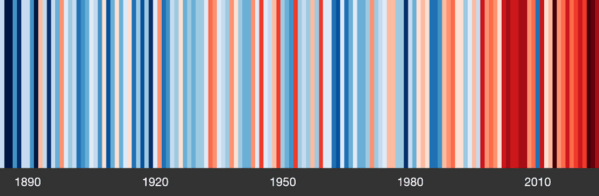
Featured image by Professor Ed Hawkins, University of Reading.