
The Commonwealth Games 2026, officially known as the XXIII Commonwealth Games, will take place in Glasgow from 23 July to 2 August. This will be the first Commonwealth Games to be held since the death of Her Majesty Queen Elizabeth II. This eleven-day tournament will include 10 sports and 6 integrated para sports:
- basketball and wheelchair basketball
- artistic gymnastics
- athletics and para athletics
- bowls and para bowls
- boxing
- judo
- netball
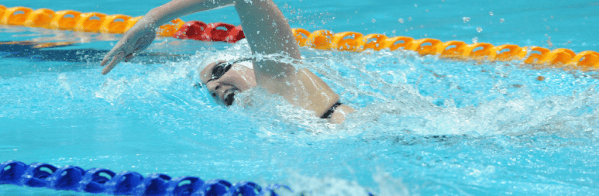
- swimming and para swimming
- track cycling and para track cycling
- weightlifting and para power lifting
The medals this year have been designed by The Glasgow School of Art Artist in Residence Militsa Milenkova, inspired by the city’s landmarks, industrial heritage and cultural identity. Around 3,000 athletes are expected to compete, representing 74 nations and territories from across the Commonwealth. The official mascot is Finnie the Unicorn, who has a traffic cone as a horn. She was designed with the help of school children from Glasgow.
In 2014, Team Scotland fielded 310 athletes and para-athletes. They won 53 medals – 19 Gold, 15 Silver and 19 bronze, ranking fourth in the overall medal table. This year, Scotland will have 165 athletes in the Games. Team Scotland have announced that they are bringing back their purple-haired Thistle mascot, Clyde.
Finding a host city
Glasgow agreed to host the games with relatively short notice after the State of Victoria in Australia withdrew as host in 2023. Victoria premier Daniel Andrews described the event as “all cost and no benefit”, with media reports citing projected costs of over AU$6 billion (about £3.2 billion). This is not the first time the organisers of the Commonwealth Games have struggled to secure a host. Durban in South Africa pulled out of hosting the 2022 Games due to costs (the Games were hosted by Birmingham that year). Alberta in Canada was pencilled in to host in 2030 but have withdrawn. Questions have been raised about the future of the Commonwealth Games, which were established in 1930 as the British Empire Games, and now compete for relevance with a busy calendar of international sporting events.
Funding
The company Glasgow 2026 Limited, which has been established to deliver the Games, stated that they are “pioneering a significantly more sustainable and innovative model for major event delivery”, which does not involve direct public funding and has a “streamlined budget of £150 million.” The last Commonwealth Games held in the UK, in 2022 in Birmingham, had a £778 million budget. The 2014 Commonwealth Games in Glasgow were delivered within a budget of £543 million. The Scottish Government in 2018 stated that the preparation and delivery of the 2014 Games was
estimated to have contributed, in gross terms, £740 million to Scotland’s GVA [Gross Value Added] (£390 million of which was to Glasgow’s GVA) and supported an estimated average of 2,100 jobs per year nationally (1,200 of which were in Glasgow).
According to a report by the Chief Executive of Glasgow City Council, the cost of the 2026 Commonwealth Games will come from the Commonwealth Games Federation and commercial arrangements. Part of the money will come from the compensation paid by Victoria when they withdrew from hosting. Income is also expected from ticket sales and commercial sponsorships. EDF, Britain’s biggest generator of zero carbon electricity, was announced on 12 June 2026 as the Official Energy and Utilities Principal Partner of Glasgow 2026 and an Official Partner for all Home Nations; Team Scotland, England, Wales and Northern Ireland.
Which sports missed out?
In 2014, there were 17 sports and an athlete’s village. This year’s Games has a reduced schedule and just four venues. Katie Sadleir, the Chief Executive of the Commonwealth Games Federation, commented to BBC Sport that “The Games had got out of hand – it was too big and trying to be a ‘mini Olympics’”. However many athletes and sports professionals expressed disappointment at losing a spot at the Games. Hockey, diving, wrestling, rugby sevens, cricket, squash, badminton and table tennis were all dropped (there will be no racquet sports at the 2026 Games). At a meeting of the Health, Social Care and Sport committee on 11 March 2025, Forbes Dunlop, Chief Executive of sportscotland, discussed the investment that was earmarked for sports previously featured in the Games:
“For sports such as hockey, which were previously in the games and now are not, we have not removed investment. We have done what we can to leave the investment on the table for them to explore other opportunities.”
However he conceded that these sports would miss out on the profile of competing in the Games.
Broadcasting the Games
Another change for 2026 is in broadcasting, with TNT showing the live broadcast of the Commonwealth Games. The subscription channel outbid the BBC, which had provided free-to-air coverage since 1954. The BBC stated that it would continue to talk to Glasgow 2026 organisers about showing as much of the Games as possible through its platforms.
The legacy of 2014
At the meeting of the Health, Social Care and Sport Committee on 3 March 2026, the committee expressed disappointment to see “some of the great facilities that had been built [for the 2014 Games] falling into disrepair, when they were supposed to be part of the legacy”. Jon Doig, chief executive officer of Commonwealth Games Scotland, referred to challenges in the wider facilities network, but commented that “were it not for the other facilities that were built [for the 2014 Games], we would not be having the 2026 games”. Kim Atkinson, chief executive officer of the Scottish Sports Association, expressed the Association’s disappointment that a legacy of volunteering was not successfully established after the 2014 Games.
The University of the West of Scotland conducted a survey in 2024 to explore the longer-term impact of the 2014 Games. They found a majority of adults surveyed had a very positive view of the 2014 Games, finding that the event had:
- Increased civic (71%) and national pride (75%)
- Improved Scotland’s international reputation (75%)
- Enhanced access to sporting facilities and activities (69%)
- Increased emphasis on public health and physical activity (76%)
- Generated a lasting impact for the host city (69%)
The Scottish Government’s 2018 report on the Glasgow 2014 Commonwealth Games Legacy notes that
Legacy is not ‘automatic’ or inevitable, rather hosting major events can be used as a ‘catalyst’ for what governments and partners want to achieve. The evidence is clear that major sporting events are not a panacea for long running social and economic challenges, and even beneficial short term economic impact is not guaranteed.
The report mentions the risk of creating ‘white elephants’ – infrastructure built for an event that falls into disuse afterwards. However the report also emphasised the hard work that went into reaching communities across Scotland, particularly those which face barriers to participation:
Glasgow 2014 examples of programmes that aimed to reach particular groups included the use of Community Benefit Clauses in Games contracts, the Volunteer Pot for those who needed resources to participate, the Host City Volunteer Programme, the Active East Project and Rugby Scotland’s ‘Sport for Change’ programme for young people with learning disabilities.
Ensuring a legacy for 2026
With an eye on the legacy of the 2026 Games, the Scottish Government has announced Scotland’s Summer of Sport, a programme of free and low-cost local sporting activities for children and young people, backed by a £20 million fund administered by sportscotland. The National Lottery Community Fund (NLCF)’s Awards for All Programme also announced, on 25 March 2026, that they have an additional £2.2 million available to support community, arts, and sports activity inspired by Glasgow 2026 Commonwealth Games, made up of £1 million from NLCF, £1 million from Sport Scotland and £200,000 from Creative Scotland.
The Centre for Culture, Sport and Events (CCSE) was commissioned by Spirit of 2012 (the London 2012 social legacy organisation founded by the National Lottery Community Fund) to create a Legacy Network for the Glasgow 2026 Commonwealth Games. The Legacy Network was launched in February 2026, at an event attended by stakeholders from organisations including Scottish Athletics, parkrun, Scottish Disability Sport, and Scottish Action for Mental Health. The Legacy Network is intended to evolve and expand, with a series of roadshows planned for the months ahead, each exploring different aspects of legacy, including sport and participation, social impact and inclusion, creative and cultural activity, and place-based initiatives.
On 23 June, George Black CBE, Chair of the Glasgow 2026 Commonwealth Games, delivered Time for Reflection in the Scottish Parliament. He mentioned the question hovering over the Games in recent years, about whether “this kind of event still had a place in the modern era”, and said that Glasgow 2026 would show that “world-class sport can be staged sustainably, affordably and inclusively” with the team in Glasgow doing something “game changing”.
Amy Jardine, Enquiries Assistant
Blog image: “Photo WA-4925L” by public.resource.org is licensed under CC BY 2.0.