

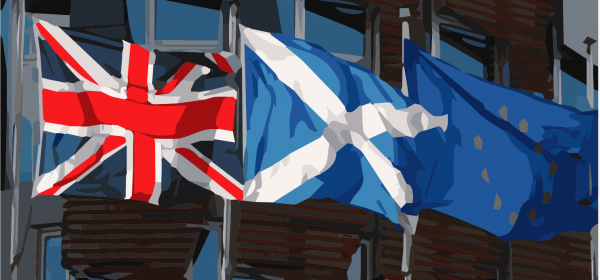
On 20 November 2026, the UK Prime Minister, Andy Burnham, met with the President of the European Commission, Ursula von der Leyen, and the President of the European Council, António Costa, at the Second UK-EU Summit in Brussels. The summit resulted in three key agreements:
- A Sanitary and Phytosanitary (SPS) Agreement, which aims to facilitate smoother trade between the UK and the EU in food, agricultural goods, animals and plants.
- An agreement on Emissions Trading Systems (ETS), to link UK and EU carbon markets, removing barriers to trade and streamlining regulatory processes.
- A new Youth Experience Scheme to enable young people from the EU and the UK to work, study and travel in each other’s territories for up to three years.
The summit is an important development in the ongoing reshaping of the UK-EU relationship since 2016. These agreements have significant implications for areas of devolved competence, as well as broader implications for the Scottish Parliament’s powers and responsibilities. Today’s European Partnership Bill is expected to provide further clarity on the trade deals.
The wider context: ‘Common Global Priorities’
Aside from these three agreements, the UK and the EU set out their shared commitments on international issues in a statement on ‘Common Global Priorities’. This built on the priorities laid out in the joint statement from the First Summit in 2025.
The statement outlined shared positions on a broad range of international issues, covering conflict and regional security, the multilateral system, the global economy, climate, biodiversity and AI. This included:
- Reaffirming ‘unwavering support’ for Ukraine.
- Calling for unimpeded humanitarian access into and throughout Gaza, and condemning settler violence and settlement expansion in the West Bank.
- Condemning Iran’s attacks on countries in the region and on shipping in the Strait of Hormuz.
A more expansive policy agenda?
As indicated above, the summit concluded key agreements on sanitary and phytosanitary (SPS) measures, emissions trading (ETS) and youth mobility. The deals concluded on SPS and ETS will require the UK to follow current and future EU law in these areas, known as ‘dynamic alignment’. The negotiations on these three issues have been covered in previous SPICe blogs examining SPS and ETS, and the youth experience scheme.
More broadly, the summit ranged across a more expansive policy agenda, with indications for future areas of cooperation, including:
- An EU-UK Digital Partnership, due to launch early next year, providing a framework for closer cooperation on AI security and safety, critical digital technologies and online safety.
- A Partnership for Economic Resilience to coordinate economic security policies, with a particular focus on steel and electric vehicles supply chains.
- The intention to develop a successor programme to PeacePlus, a cross-border funding initiative to promote peace and prosperity along the border of Northern Ireland and the Republic of Ireland.
- An agreement for future cooperation on supporting cultural and artistic exchanges, including the activities of touring artists.
- A future agreement on the mutual recognition of professional qualifications for architects, and potential arrangements for other professions.
- Measures relating to law enforcement and migration, including a new ‘Structured Dialogue on migration’ to improve cooperation.
- Security, defence and development measures, including a ‘Framework Participation Agreement’ for UK participation in EU civilian missions under the Common Security and Defence Policy (CSDP).
From a devolved policy perspective, several of these areas, including culture, justice and higher education, touch on matters within the Scottish Parliament’s responsibilities. However, most of these issues are commitments to explore or work towards future arrangements, and the detail is still to be developed.
Scottish Government reaction
Shortly after the summit, on 24 November, the Minister for Europe, External Affairs and Energy, Stephen Gethins, made a statement to the Scottish Parliament arguing that, while the agreements were ‘welcome progress’, they should ‘represent the beginning of greater ambition, not the end of it’.
Furthermore, the Minister expressed concern that many aspects of the deal would have ‘significant impact on areas of devolved competence’, and that detail on how Scotland will participate in shaping decisions on matters affecting devolved responsibilities remained ‘unresolved’.
Ultimately, as outlined in the recent paper on their priorities for this summit, the Scottish Government continues to advocate rejoining the EU.
Implications for the Scottish Parliament
A key issue that remains uncertain is how relevant EU rules will be incorporated into UK law and therefore how ‘dynamic alignment’ will work in practice.
As noted in a SPICe blog last week, the European Partnership Bill may outline powers for UK Ministers to implement these EU rules via secondary legislation. This would give UK Ministers the power to alter Scottish devolved law in those areas affected by dynamic alignment, without the Scottish Parliament having a role in scrutinising these changes.
Aside from these ‘dynamic alignment’ issues, a key concern for Scotland is the uncertainty about tuition fees. Negotiations on fees remain ongoing: the EU wants its students to pay the same rate as UK students, which might prove unpopular among UK universities relying on the higher income from EU students. The UK-EU joint statement outlined that an agreement will be concluded ‘within six months from the date of the summit’.
Moreover, discussions around rejoining the EU’s internal electricity market remain unresolved and the joint statement indicates that they will not be finalised until 2027.
Finally, as anticipated, no further negotiations were made on fishing. The summit reaffirmed the prior agreement on full reciprocal access to waters to fish until 30 June 2038, which has ongoing implications for Scottish fisheries.
Conclusion
Looking ahead, the UK Prime Minister has indicated his intention to begin ‘a discussion with our EU partners about options for our long-term relationship’. For Scotland, the full implications for dynamic alignment, Scottish Parliament scrutiny and devolved policy areas should become clearer as further details on last week’s agreements emerge. Today’s European Partnership Bill, should provide greater clarity, and SPICe will provide an update in due course.
Grace Carrington, Senior Researcher (Europe, External Affairs and Governance)