
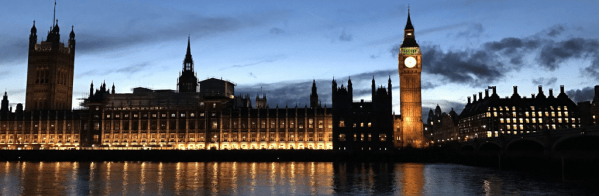
The State Opening of the new UK Parliament took place on Wednesday 17 July 2024. The State Opening marks the start of a Parliamentary session at the UK Parliament.
This was the first King’s Speech following the UK General Election on 4 July 2024 which saw the Labour party winning a majority in the House of Commons. As a result, for the first time since 2009, the Monarch’s speech outlined the priorities of a Labour government, many of which were previously set out in the Labour Party manifesto ahead of the General Election.
This blog provides an overview of the King’s Speech and focuses on its potential implications for Scotland. You can use the expandable headings below to navigate the blog.
Overall theme of the speech
The legislative programme set out by His Majesty King Charles III includes measures to support the economy and encourage economic growth; it also makes proposals around employment conditions. The King set out that:
My Government will govern in service to the country.
My Government’s legislative programme will be mission led and based upon the principles of security, fairness and opportunity for all.
What primary legislation will be introduced in the UK Parliament this session?
40 Bills were detailed in the King’s Speech. The UK Government publishes background briefing notes which give full details on the legislative programme. The 40 Bills (and their expected territorial extent and application) are:
- Budget Responsibility Bill (United Kingdom)
- National Wealth Fund Bill (United Kingdom)
- Pension Schemes Bill (Great Britain)
- Planning and Infrastructure Bill (England and Wales with some measures likely to apply to Scotland)
- Employment Rights Bill (Great Britain)
- English Devolution Bill (England and Wales and apply to England)
- Passenger Railway Services (Public Ownership) Bill (Great Britain)
- Better Buses Bill (England and Wales and apply to England)
- Railways Bill (Great Britain)
- Bank Resolution (Recapitalisation) Bill (United Kingdom)
- Arbitration Bill (England, Wales and Northern Ireland)
- Product Safety and Metrology Bill (United Kingdom)
- Digital Information and Smart Data Bill (United Kingdom)
- High Speed Rail (Crewe to Manchester) Bill (Great Britain)
- Draft Audit Reform and Corporate Governance Bill (United Kingdom)
- Great British Energy Bill (United Kingdom)
- The Crown Estate Bill (England, Wales and Northern Ireland)
- Sustainable Aviation Fuel (Revenue Support Mechanism) Bill (United Kingdom)
- Water (Special Measures) Bill (England and Wales)
- Border Security, Asylum and Immigration Bill (United Kingdom)
- Crime and Policing Bill (England and Wales)
- Terrorism (Protection of Premises) Bill (United Kingdom)
- Victims, Courts and Public Protection Bill (to be confirmed, but expected England and Wales)
- Children’s Wellbeing Bill (to be confirmed, but expected England and Wales and apply to England)
- Skills England Bill (England and Wales and apply to England)
- Renters’ Rights Bill (England and Wales and apply to England)
- Football Governance Bill (England and Wales)
- Draft Leasehold and Commonhold Reform Bill (England and Wales)
- Draft Equality (Race and Disability) Bill (Great Britain)
- Draft Conversion Practices Bill (England and Wales)
- Tobacco and Vapes Bill (United Kingdom with application of measures varying across the UK)
- Mental Health Bill (England and Wales)
- Hillsborough Law (Public Candour) Bill (to be determined)
- Armed Forces Commissioner Bill (United Kingdom)
- Northern Ireland Legacy Legislation (United Kingdom mostly applying in Northern Ireland)
- House of Lords (Hereditary Peers) Bill (United Kingdom)
- Cyber Security and Resilience Bill (United Kingdom)
- Commonwealth Parliamentary Association and International Committee of the Red Cross (Status) Bill (United Kingdom)
- Lord Spiritual (Women) Act 2015 (Extension) Bill (United Kingdom)
- Holocaust Memorial Bill (England and Wales and apply to England)
How does what was announced relate to Scotland?
A number of the Bills announced will contain provisions that will apply to Scotland. In some cases this is because the proposed legislation relates to a reserved matter (e.g. the Budget Responsibility Bill). Where the legislation relates to a devolved matter, the UK Government has indicated that the territorial extent of some provisions of the Bill will extend to Scotland.
The UK Parliament retains authority to legislate on any issue, whether devolved or not. However, the Sewel Convention means that the UK Parliament does not normally legislate on devolved matters in Scotland without the consent of the Scottish Parliament.
Bills likely to be significant to Scotland
24 of the 40 Bills outlined in the King’s Speech apply to Scotland. The Bills are discussed in more detail below using the background briefing notes provided by the UK Government.
Budget Responsibility Bill (United Kingdom)
The Budget Responsibility Bill will deliver a Labour Party manifesto pledge to introduce a ‘fiscal lock’ requiring every fiscal event which makes significant and permanent changes to taxation or spending to be subject to an independent assessment by the Office for Budget Responsibility.
National Wealth Fund Bill (United Kingdom)
This Bill will create a National Wealth Fund. According to the UK Government it has:
already begun work to align the UK Infrastructure Bank and the British Business Bank under the National Wealth Fund. The National Wealth Fund Bill will ensure this institution is at the heart of the country’s mission to grow the economy and create wealth in every community.
Pension Schemes Bill (Great Britain)
This Bill will seek to support people who save in private-sector pension schemes. Measures to be included in the Bill include:
- preventing people from losing track of their pension pots through the consolidation of Defined Contribution individual deferred small pension pots.
- ensuring all members are saving into pension schemes delivering value through the Value for Money framework.
- requiring pension schemes to offer retirement products so people have a pension and not just a savings pot when they stop work.
- reaffirming the Pensions Ombudsman as a competent court.
Planning and Infrastructure Bill (England and Wales with some measures likely to apply to Scotland)
This Bill will seek to reform the planning system to support the UK Government’s stated aim of unlocking economic growth by delivering housing and critical infrastructure. To support this, the Bill will:
make improvements to the planning system at a local level, modernising planning committees and increasing local planning authorities’ capacity to deliver an improved service.
Employment Rights Bill (Great Britain)
To support the UK Government’s ambition to “make work pay”, this Bill will seek to:
- Ban zero-hour contracts.
- End ‘Fire and Rehire’ and ‘Fire and Replace approaches.
- Make parental leave, sick pay and protection from unfair dismissal available from day one on the job for all workers.
- Strengthen Statutory Sick Pay by removing the lower earnings limit to make it available to all workers.
- Make flexible working available for all workers from the start of their employment.
- Strengthen protections for new mothers.
- Establish a new Single Enforcement Body, also known as a Fair Work Agency, to strengthen enforcement of workplace rights.
- Establish a Fair Pay Agreement in the adult social care sector and, following review, assess how and to what extent such agreements could benefit other sectors.
- Update trade union legislation so it is fit for a modern economy,
- Simplify the process of statutory recognition and introduce a regulated route to ensure workers and union members have a reasonable right to access a union within workplaces.
Passenger Railway Services (Public Ownership) Bill (Great Britain)
This Bill will allow deliver a Labour Party manifesto pledge to bring rail services back into public ownership. According to the UK Government, the Bill:
will amend existing railways legislation so that appointing a public-sector operator is the default position rather than merely a last resort. We are introducing this piece of legislation swiftly to ensure we are able to act decisively and bring the first contracts back into public ownership as soon as possible once it is in place.
Railways Bill (Great Britain)
This Bill will seek to complement the Passenger Railway Services (Public Ownership) Bill. According to the UK Government, this Bill will bring:
together the management of the network and the delivery of passenger services into a single public body, Great British Railways (GBR).
Bank Resolution (Recapitalisation) Bill (United Kingdom)
This Bill will introduce a new mechanism to allow the Bank of England to use funds provided by the banking sector to cover certain costs associated with resolving a failing banking institution and achieving its sale in whole or in part. According to the UK Government, the Bill “is designed in particular to respond more effectively to small bank failures where resolution is judged to be in the public interest”.
Product Safety and Metrology Bill (United Kingdom)
According to the UK Government, this Bill will:
preserve the UK’s status as a global leader in product regulation, supporting businesses and protecting consumers. It will ensure the UK is better placed to address modern day safety issues, harness opportunities that deliver economic growth, and ensure a level playing field between the high street and online marketplaces.
Recognising that much of the UK’s current product safety and metrology framework is derived from EU law, the UK Government states that the Bill:
will enable us to make the sovereign choice to mirror or diverge from updated EU rules, so that we can maintain high product safety while supporting businesses and economic growth.
Digital Information and Smart Data Bill (United Kingdom)
According to the UK Government, this Bill will:
enable new innovative uses of data to be safely developed and deployed and will improve people’s lives by making public services work better by reforming data sharing and standards; help scientists and researchers make more life enhancing discoveries by improving our data laws; and ensure your data is well protected by giving the regulator (the ICO) new, stronger powers and a more modern structure.
Draft Audit Reform and Corporate Governance Bill (United Kingdom)
This Bill proposes to replace the Financial Reporting Council with a new regulator – the Audit, Reporting and Governance Authority – with the powers it needs to tackle bad financial reporting and to build trust in companies for investors, employees and consumers and ensure they have an accurate picture of the health of a company.
Great British Energy Bill (United Kingdom)
This Bill will deliver a Labour Party manifesto pledge to create Great British Energy. According to the UK Government:
Great British Energy will be owned by and for British people, helping to make our country energy independent and so ensure British taxpayers, bill payers and communities reap the benefits of clean, secure, home-grown energy and lower bills for families.
The UK Government has confirmed that Great British Energy will be headquartered in Scotland.
Sustainable Aviation Fuel (Revenue Support Mechanism) Bill (United Kingdom)
This Bill is intended to support and encourage sustainable aviation fuel production. It will introduce a revenue certainty mechanism for sustainable aviation fuel producers who are looking to invest in new plants in the UK. According to the UK Government:
This new sector will create jobs and growth opportunities in the UK, help secure a supply of SAF for UK airlines, and enhance energy security.
Border Security, Asylum and Immigration Bill (United Kingdom)
According to the UK Government, this Bill will:
support our priority of secure and stronger borders and a properly controlled and managed asylum system by launching a Border Security Command to bring criminal people smugglers to justice, tackling criminal gangs who exploit migrants and fuel the small boats crisis, and clearing the asylum backlog to end hotel use and increase returns.
Terrorism (Protection of Premises) Bill (United Kingdom)
A previous (Protection of Premises) Bill was considered in the last UK Parliament but fell at dissolution. This proposed Bill will deliver a Labour Party manifesto commitment to bring in ‘Martyn’s Law’ and strengthen the security of public events and venues. The Bill will require those responsible for certain premises and events to take steps to mitigate the impact of a terrorist attack and reduce harm in the event of a terrorist attack occurring. The Bill will include:
- A requirement for smaller premises in the ‘standard tier’ to notify the regulator of their premises and put in place measures to keep the public safe.
- A requirement for larger premises in an ‘enhanced tier’ to put in place counter-terrorism measures.
Draft Equality (Race and Disability) Bill (Great Britain)
This Bill will deliver a Labour Party manifesto commitment to enshrine in law the full right to equal pay for ethnic minorities and disabled people and introduce mandatory ethnicity and disability pay reporting for larger employers (250+ employees).
Tobacco and Vapes Bill (United Kingdom with application of measures varying across the UK)
A previous Tobacco and Vapes Bill was considered in the last UK Parliament but fell at dissolution. This Bill delivers a Labour Party manifesto commitment to introduce a progressive smoking ban. It will progressively increase the age at which people can buy cigarettes meaning that children born on or after 1 January 2009 will never be able to legally be sold cigarettes. The Bill will also impose limits on the sale and marketing of vapes and strengthen enforcement activity to enforce the law and close loopholes.
Armed Forces Commissioner Bill (United Kingdom)
This Bill will establish a statutory Armed Forces Commissioner to “act as a strong independent champion for our service personnel and their families”. According to the UK Government, the Commissioner will:
- Be a new, direct and independent contact point for serving personnel and their families to raise issues,
- strengthen parliamentary oversight issues facing Armed Forces personnel, and
- have powers to investigate and highlight issues.
House of Lords (Hereditary Peers) Bill (United Kingdom)
This Bill will deliver a Labour Party manifesto commitment to remove the right of remaining hereditary peers to sit and vote in the House of Lords. According to the UK Government, this “will be the first step in wider reform to the second chamber.”
Cyber Security and Resilience Bill (United Kingdom)
According to the UK Government, this Bill will strengthen the UK’s cyber defences and ensure that critical infrastructure and the digital services that companies rely on are secure. This will include the following updates to existing regulations:
- Expanding the remit of the regulation to include more digital services and supply chains,
- giving regulators powers to proactively investigate potential vulnerabilities and establishing mechanisms to provide resources, and
- mandating increased incident reporting.
Commonwealth Parliamentary Association and International Committee of the Red Cross (Status) Bill (United Kingdom)
The Commonwealth Parliamentary Association and the International Committee of the Red Cross are not formally recognised as international organisations. This Bill will change the status of both organisations so that they can be treated like an international organisation of which the UK or UK Government is a member. The Bill will enable specific privileges and immunities to be conferred on both organisations as well as ensure that confidential information provided by the International Committee of the Red Cross can remain confidential.
Lord Spiritual (Women) Act 2015 (Extension) Bill (United Kingdom)
This Bill will extend provisions in the Lords Spiritual (Women) Act 2015 (to ensure that female bishops enter the House of Lords sooner than they otherwise would) which would otherwise expire in May 2025. According to the UK Government, this extension will “support efforts to increase the number of female bishops in the House of Lords.”
Hillsborough Law [Public Candour] Bill
This Bill will deliver a Labour Party manifesto commitment to implement a ‘Hillsborough Law’ which will place a legal duty of candour on public servants and authorities. According to the UK Government:
It will address the unacceptable defensive culture prevalent across too much of the public sector – highlighted by recent reports such as Bishop James Jones’s report into the experiences of the Hillsborough families and the recent Infected Blood Inquiry report.
Renters Rights Bill [only in respect of discrimination against tenants on benefits or with children]
Although the UK Government has indicated that the majority of this Bill will apply to England only, the Scotland Office has indicated that in respect of discrimination against tenants on benefits or with children, these measures may apply to Scotland.
This Bill will make it illegal for landlords to discriminate against tenants in receipt of benefits or with children when choosing to let their property meaning that “no family is discriminated against and denied a home when they need it”.
Northern Ireland Legacy Legislation (United Kingdom mostly applying in Northern Ireland)
Although it is not identified as applying to Scotland by the Scotland Office, the Northern Ireland Legacy Legislation may be relevant.
The Bill will deliver a Labour Party manifesto commitment to repeal and replace provisions in the Northern Ireland Troubles (Legacy and Reconciliation) Act 2023. The Bill will repeal the conditional immunity scheme in the Act, which provides immunity from prosecution for those who cooperate with investigations conducted by the Independent Commission for Reconciliation and Information Recovery. The Bill will also reverse prohibitions on bringing civil claims and the halting of Troubles-era inquests. The Bill will not repeal the Act as a whole. According to the UK Government:
Further legislation will follow after consultation with the Northern Ireland political parties, the Irish Government and all communities in Northern Ireland.
When the Northern Ireland Troubles (Legacy and Reconciliation) Act 2023 was progressing through the UK Parliament, the Scottish Parliament was asked for legislative consent to some provisions in the Bill.
Council of the Nations and Regions
Whilst not linked to any of the proposed Bills announced, the King’s Speech also referenced the delivery of a Labour Manifesto pledge with the establishment of a new Council of the Nations and Regions which will “renew opportunities for the Prime Minister, heads of devolved governments and mayors of combined authorities to collaborate with each other.”
The operation of this new intergovernmental body is likely to be of interest to the Scottish Parliament once it is up and running.
Reaction to the King’s Speech
Following the King’s Speech, the Secretary of State for Scotland, Ian Murray MP said:
We have been clear that we want to reset our relationship with the Scottish Government, and to work together to deliver better outcomes for people. Our rail ownership bill will ensure that ScotRail is kept in public hands, and we want to work with the Scottish Government to pass laws that will reduce the availability of addictive vapes to young people.
The Scottish Government’s Deputy First Minister, Kate Forbes MSP welcomed the content of the King’s Speech:
“The Prime Minister has said he wants to reset the relationship with the Scottish Government, respect the devolution settlement and work constructively together. I am pleased to see this approach reflected in the King’s Speech, and we will support the opportunities it presents to improve the lives of people in Scotland.
“I look forward to early and meaningful engagement on UK Bills, including the New Deal for Working People. We have been clear in our opposition to the inappropriate use of zero hours contracts and other types of employment that offer workers minimal job or financial security.
“We also welcome the Tobacco and Vapes Bill being taken forward. This is an important step forward in public health, and a four-nations approach will offer more certainty for businesses and consistency for consumers.
“The priorities of the Scottish Government for the year ahead will be announced in the First Minister’s Programme for Government, when he will set out how we will deliver for communities right across the country.”
SPICe will provide analysis of the Scottish Government’s Programme for Government following the Scottish Parliament’s summer recess.
Iain McIver and Annie Bosse
SPICe Research