
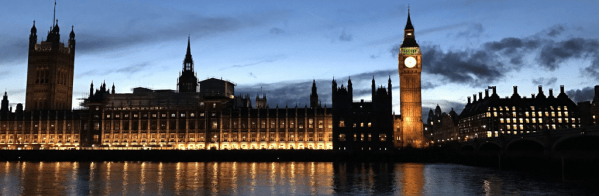
The State Opening of the UK Parliament took place on Wednesday 13th May 2026. The State Opening marks the start of a Parliamentary session at the UK Parliament. His Majesty the King formally opens Parliament. Sessions at the UK Parliament usually last around a year and tend to begin and end in the spring. That said, the last session lasted nearly two years with the State Opening and King’s speech having taken place in July 2024.
The purpose of the King’s Speech is to outline the UK Government’s policies and the legislation it intends to introduce over the coming session. The House of Commons Library has published a briefing on the King’s Speech which contains detailed information on the history of the Speech and the drafting process behind it.
This blog provides an overview of the King’s Speech and focuses on its potential implications for Scotland. It also explains how the Scottish Parliament considers legislative consent memorandums for relevant UK Bills. The UK Government publishes background briefing notes for the King’s Speech which provide detail on the legislative programme.
Carried over Bills
At the UK Parliament a carry-over motion can be tabled which allows a Public Bill to carry over from one session of the Parliament to the next. There are a number of Bills which affect Scotland for which carry over motions have been agreed. These Bills are all subject to legislative consent through the Sewel Convention and have already had legislative consent memorandums lodged at the Scottish Parliament during Session 6:
- Armed Forces Bill
- Cyber Security and Resilience (Network and Information Systems) Bill
- Northern Ireland Troubles Bill
- Public Office Accountability Bill
- Railways Bill
- Representation of the People Bill
Overview of UK Government legislative programme
The main themes of the King’s Speech were the “increasingly dangerous and volatile world” in which we live and the cost of living crisis. Ahead of the Speech, the UK Government stated that its legislative programme would “put the UK on a stronger, fairer path that unlocks hope for people across Britain”.
The UK Government’s commitment “to the strength and integrity of the Union of the United Kingdom” was also mentioned, His Majesty stating that his Government “will continue to work closely with the devolved governments to deliver for citizens across the whole of the nation”.
The Government announced a legislative programme of 37 Bills (including those which have been carried over from the last session and draft Bills) “targeted at strengthening the UK’s foundations through measures to bolster economic, energy, national security”. These include an Immigration and Asylum Bill, legislation to nationalise British Steel and a Regulation for Growth Bill.
The new Bills (Bills which have been carried over are not covered) announced which apply to the whole of the UK or where some provisions are listed as likely to extend to Scotland are listed below. You can read more about each of the proposed Bills in the UK Government’s briefing notes. Some of these Bills relate to reserved matters, others are likely to require the Scottish Parliament to consider a legislative consent memorandum.
- Civil Aviation Bill
- Clean Water Bill (some measures expected to extend to Scotland)
- Competition Reform Bill
- Digital Access to Services Bill
- Electricity Generator Levy Bill
- Enhancing Financial Services Bill
- EU Partnership Bill
- Immigration and Asylum Bill
- NHS Modernisation Bill (some provisions extending to the whole of the UK)
- National Security Bill (the UK Government is “considering the extension of measures to Scotland…with the Scottish Government”)
- Nuclear Regulation Bill
- Tackling State Threats Bill
- Small Business Protections (Late Payments) Bill
- Sovereign Grant Bill
- Sporting Events Bill
- Railways and Passenger Benefits Bill
- Regulating for Growth Bill
- Removal of Peerages Bill
- Ticket Tout Ban Bill (draft)
The EU Partnership Bill
Arguably the big-ticket item in the UK Government’s legislative programme is the EU Partnership Bill which the UK Government says will:
help deliver the manifesto commitment to improve the UK’s trade and investment relationship with the EU by facilitating the implementation of new deals agreed with the EU now and in the future.
In May 2025, the UK and the EU agreed to negotiate a closer partnership in areas such as emissions trading, animal and plant health and electricity networks. Since that summit both sides have been negotiating the details of these agreements. The EU Partnership Bill will “provide a framework of powers to ensure agreements with the EU can be implemented now and in the future”.
As set out in the SPICe Key Issues for Session 7 briefing, to enable agreements on emissions trading and animal and plant health, the EU will require the UK to dynamically align with EU law. Dynamic alignment means requiring the UK to transpose and implement EU law in all relevant policy areas. It has been proposed that the European Commission will consult the United Kingdom at an early stage of policy-making for laws in relevant areas but the UK would not be able to participate in the EU’s legislation processes. The EU Partnership Bill will confer powers on Ministers to ensure the UK can dynamically align with EU rules in emissions trading and animal and plant health whilst also providing a power to facilitate alignment in other policy areas in the future subject to agreements being negotiated with the EU.
As the Key Issues briefing sets out, whilst the full details of the EU Partnership Bill aren’t yet known, it:
could give UK Ministers powers to keep the statute book aligned as necessary, or it could confer powers on UK Ministers and Scottish Ministers (within devolved competence).
By way of a recent example, the Product Regulation and Metrology Act 2025 saw UK Ministers take powers in devolved areas with a consent requirement – meaning that UK Ministers must seek the consent of Scottish Ministers before making secondary legislation in devolved areas.
The Scottish Parliament is expected to consider a legislative consent memorandum relating to the EU Partnership Bill early in Session 7. This will be the only opportunity for the Parliament to consider who has powers to make secondary legislation to allow for dynamic alignment.
In addition, in relation to the EU Partnership Bill, the Scottish Parliament is likely to want to understand how the UK Government is reaching agreement with the EU on policy areas where UK and EU law should align, particularly in devolved areas, so that it can try to influence negotiations to ensure that its voice is heard on matters which are of central importance to Scotland. That it likely to need an understanding of the intergovernmental processes not only between the UK and EU but also between the Scottish Government and the UK Government.
How does the Scottish Parliament scrutinise legislative consent memorandums?
The UK Parliament will ‘not normally’ legislate in areas devolved to the Scottish Parliament without the Parliament’s consent. The legislative consent process is known as the Sewel convention. A SPICe factsheet on consent processes at the Scottish Parliament explains the convention in more detail
The Scottish Parliament’s consent is only required for UK Bills which make ‘relevant provision’, which means provision which applies to Scotland in any of the following ways:
- for any purpose within the legislative competence of the Scottish Parliament
- to alter that legislative competence of the Scottish Parliament
- to alter the executive competence of the Scottish Ministers.
The Scottish Government usually lodges a legislative consent memorandum (LCM) with the Scottish Parliament within two weeks of a relevant Bill being introduced at the UK Parliament. An LCM should set out:
- what the Bill does
- its policy objectives
- the extent to which it makes relevant provision.
Consideration of an LCM is assigned to a lead committee in the Scottish Parliament. The lead committee is the subject committee whose remit most closely aligns with the policy content of the Bill.
The Delegated Powers and Law Reform (DPLR) Committee (the Committee which undertakes technical scrutiny) also looks at all LCMs. Where a Bill contains provisions which confer powers on Scottish Ministers to make secondary legislation (delegated powers) the DPLR Committee must consider those provisions and can report on them to the lead committee. In past Sessions, the DPLR Committee has also adopted the practice of scrutinising any provisions in a Bill that confer delegated powers on UK Ministers to legislate in devolved areas.
How does the Parliament make its view on legislative consent known?
The Scottish Government may indicate in an LCM whether in its view the Parliament should, or should not, consent to the UK Parliament passing the Bill. It is, however, for the Parliament to decide and it does not have to share the Scottish Government’s view.
The lead committee considering the LCM reports to the Parliament on it.
The Parliament makes its view known by voting on a motion on legislative consent. Not all LCMs lead to a motion on legislative consent being lodged, but the majority do. A motion on legislative consent can indicate that the Parliament gives its consent, or that it withholds its consent.
As the Sewel Convention is not legally binding, the UK Parliament can still pass a Bill, even where the Scottish Parliament withholds its consent.
What’s the story on delegated powers?
‘Delegated powers’ refers to where the Parliament gives others (usually Ministers) the power to make secondary legislation. Delegated powers are granted in Acts. UK Acts can give powers to Scottish Ministers and/or to UK Ministers. In general, UK Acts made after 1999 which created new powers in devolved areas tended to confer the new powers on Scottish Ministers rather than UK Ministers.
Since 2016, however, primary legislation passed by the UK Parliament (including legislation for which the Scottish Parliament has withheld consent), has increasingly given UK Ministers powers to act in devolved areas.
The Session 6 Constitution, Europe, External Affairs and Culture Committee recognised the implications of UK Ministers having delegated powers in devolved areas for the devolution settlement and the Scottish Parliament’s ability to scrutinise devolved law. It stated in its report How devolution is changing post EU:
The extent of UK Ministers’ new delegated powers in devolved areas amounts to a significant constitutional change. We have considerable concerns that this has happened and is continuing to happen on an ad hoc and iterative basis without any overarching consideration of the impact on how devolution works.
It appears that the current UK Government is also open to taking delegated powers in devolved areas, albeit the present administration has agreed to the inclusion of statutory consent requirements (i.e., a requirement to gain the consent of Scottish Ministers) in some UK Bills which grant UK Ministers powers in devolved areas. Examples include the Product Regulation and Metrology Act 2025 and the Animal Welfare (Import of Dogs, Cats and Ferrets) Act 2025.
What’s the scrutiny challenge?
Secondary legislation made by UK Ministers is scrutinised by the UK Parliament, not the Scottish Parliament.
As such, the Scottish Parliament’s only opportunity to consider whether it is happy with what a UK Bill proposes in relation to the conferral of any delegated powers on UK Ministers (to act in devolved areas) is at the point it considers a legislative consent memorandum.
Sarah McKay and Iain McIver, SPICe research