

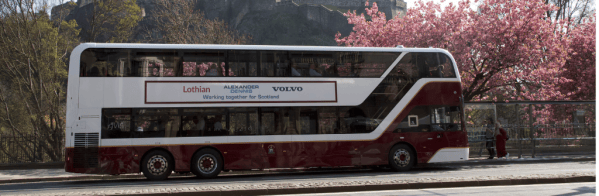
Transport. Everyone has views on it. The proliferation of potholes, the reduction of bus services, the state of the trunk road network and many other apparent failings of the system regularly feature in media articles and conversation, even though most trips occur without delay or incident.
Beyond these day to day concerns, there are several significant underlying issues that affect how people choose to travel, what transport costs, and the effectiveness of transport infrastructure investment, that rarely feature in such discourse and are not well understood outside of academia or transport policy circles. This post briefly introduces some of these key concepts, with a view to informing debate on transport matters in the new parliamentary session, with a particular focus on road transport.
The purpose of transport
Transport is considered a ‘derived demand’, meaning it exists to facilitate another activity. This demand can be direct, e.g. travel to work, the shops, or the movement of goods, or it can be indirect, i.e. trips undertaken to facilitate travel by others – such as the movement of petrol from refineries to petrol stations by road tanker.
Unlike many other goods or services, transport cannot be stored, e.g. an unsold seat on a particular train service will be forever unused – it cannot be used as additional capacity later. This means that strategic road networks and public transport systems are typically designed to deal with high levels of usage, so peak travel periods can be accommodated. This can result in significant excess capacity in off-peak periods. In such cases, transport providers often attempt to induce demand by pricing or other mechanisms, e.g. lower off-peak fares or free parking at key destinations.
Mobility Vs accessibility
The terms ‘mobility’ and ‘accessibility’ are often used interchangeably in transport policy discussions, but they actually mean different things. Mobility is generally considered to be the ease with which people can move, with a particular policy focus on reducing journey times and increasing the speed of movement.
Accessibility is the measure of how easy it is for an individual to reach a particular destination or use a service. While apparently a simple calculation, accessibility can be considered on three different levels.
- Micro: The ability of individuals to access vehicles, e.g. do buses have step-free access, are taxis equipped with wheelchair ramps, are there suitably trained staff and adequate infrastructure at stops and stations.
- Meso: The ability of individuals to move efficiently within a neighbourhood, with as few barriers to direct travel as possible, including social, economic, and environmental factors – not solely physical accessibility.
- Strategic: The ability of individuals to travel from one area to another to participate in an activity, with as few barriers to direct travel as possible. This is a function of land use, transport, and other public sector policy, e.g. fare regulation.
In recent years, the focus of transport policy across Europe has begun to shift from facilitating mobility, especially by private car, to improving accessibility to the goods and services people need to live a good life, regardless of their access to a car or ability to drive. This change is in recognition of the negative impacts of continually increasing car travel, such as local air pollution, traffic collisions, and greenhouse gas emissions.
The role of roads and streets
While not the subject of clear-cut definitions, roads and streets perform related, but different, functions. Roads are thoroughfares whose main function is to facilitate the movement of vehicles. Streets preform multiple social, commercial, leisure, and community functions (together known as ‘place functions’) as well as facilitating vehicle movement at a volume and speed appropriate to the performance of these place functions.
Motornormativity
Motornormativity is an unconscious psychological and cultural bias leading people to apply lower ethical and safety standards to the impact of private cars than they do to other common aspects of daily life, e.g. accepting air pollution generated by traffic when they would be opposed to similar levels of air pollution from smoking. This unconscious bias leads both decision makers and the general public to accept the negative effects of mass motoring as a normal part of life. This results in personal decisions on how to travel and policy decisions on transport developments generally favouring car travel – even amongst those who do not routinely travel by car. Academics argue that motornormative views arise from a range of external physical and cultural influences, such as individuals observing parents’ driving while growing up, mass-media discourses about how it is not only normal but even desirable to drive even short distances, and urban environments specifically designed to facilitate travel by car.
Community severance

Community severance describes when transport infrastructure or the presence of motorised traffic, acts as a physical or psychological barrier to activities such as the chance meetings of neighbours on the street, access to public transport stops/stations, informal children’s play, or walking and cycling. Severance can be caused by physical infrastructure, e.g. major roads, railways, the presence of pedestrian guard railings or a lack of footways or safe crossings (a particular issue in rural areas), or by the speed or weight of motorised traffic. Severance has been found to reduce social contact, negatively affect mental and physical health, and reduce levels of walking and cycling.
Transport poverty
Transport poverty is a concept developed to define the effect of limited transport choices available to specific groups, typically low-income households or people experiencing multiple deprivation. Transport poverty can be characterised as an individual experiencing one or more of the following:
- Mobility poverty: A lack of transport options for individuals due to decisions taken at an area wide/transport system level, e.g. no useable public transport services being available in an area.
- Accessibility poverty: Individuals cannot reach vital destinations such as employment, education, healthcare, and shops within a reasonable time and at manageable cost.
- Transport affordability: Individuals and households lack the financial resources required to access transport options, such as access to a car and/or public transport services.
- Exposure to negative externalities: Individuals experience disproportionate exposure to the negative effects of the transport system, which tends to affect the most socially excluded members of society who typically travel less than other groups, such as road traffic injuries, or chronic diseases and deaths from traffic related air pollution.
Forced car ownership
Forced car ownership refers to the situation where households, despite limited economic resources, consider they have no choice but to own and use a car as it is the only viable way of accessing essential services and opportunities. Forced car ownership is linked to a range of negative outcomes, including reduced travel activity, cuts to other parts of a household’s budget and significant vulnerability to fuel price increases. It is important to note that forced car ownership is not just a problem of remote rural areas but can be experienced by those living in suburban and urban areas where public transport or walking and cycling networks do not meet a household’s or individual’s transport needs.
Induced demand
Induced demand refers to a situation where increases in road capacity or improvements in transport infrastructure lead to a higher volume of traffic than originally projected. This is often due to latent demand, i.e. trips that were previously suppressed by extended journey times due to traffic congestion or perceived cost, becoming viable under the improved level of service and infrastructure. Over time, the presence of the new or improved infrastructure leads to new development, changes in land use and shifts in travel behaviour that result in further increases in traffic, eroding any initial congestion relief and generating greater environmental impacts. It is important to note that induced demand is not just an academic concept, significant research carried out by transport consultants for the UK Government in 2018 concluded that “…induced traffic does exist and may be significant in some situations.”
Traffic evaporation

Traffic evaporation, also known as ‘disappearing traffic’, is effectively the opposite of induced demand. Research has found that the well-designed reallocation of general carriageway space to buses, cyclists and pedestrians does not automatically lead to a worsening in traffic congestion and associated impacts but can result in a reduction in total motorised traffic across the roads affected and the surrounding area. Traffic evaporation is explained by the behavioural responses that people make following a change in road layout, including decisions on whether to make a trip, changing routes used, changing the mode of travel, consolidating trips, or changing trip frequency. In addition, giving more space to public transport, cyclists and pedestrians can significantly increase the carrying capacity of a street or road, as research indicates travel by such modes can be up to 20 times more space efficient than travel by a typical car.
Dynamic routing
Dynamic routing describes the system used by modern Satellite Navigation systems and Map Apps to guide drivers via the quickest route to their destination, using real-time data to avoid congested streets, road works, and other obstructions. However, academic research and UK Department for Transport data indicates that the use of such systems has significantly increased traffic on residential streets producing negative impacts, especially in previously lightly trafficked areas. These impacts can include increased traffic congestion, road danger, local air pollution, and road damage. Measures to tackle this issue can include banning turns from main roads, street closures, speed limit reductions, and the creation of low traffic neighbourhoods.
Car bloat

Car bloat, also known as autobesity or carspreading, describes the increasing prevalence of larger and heavier cars on UK roads, a phenomenon largely driven by the growth in Sports Utility Vehicles (SUVs). This is producing a raft of negative consequences for all road users.
Research has found that pedestrians and cyclists involved in a collision with an SUV are more likely to suffer severe injuries or death than if hit by a regular passenger car, with the effect particularly pronounced amongst children who are especially affected by high bonnet heights. SUVs also produce 20% to 25% more greenhouse gas emissions than typical cars due to higher fuel consumption and have also been found to reduce road capacity, increasing the incidence of traffic congestion. Larger and heavier SUVs also cause more damage to road surfaces than regular cars due to their weight. The damage caused to a road surface is proportional to the fourth power of a vehicle’s axle weight, e.g. if you double the axle weight then the damage increases 16-fold (that is two to the power of four, or 24). Large SUVs do not fit in standard size car parking spaces, reducing car park capacity and road space where there is on-street parking.
Conclusion
Two overarching themes arise from consideration of the concepts outlined above. The first is that road traffic is not a force of nature. Rather, it is the result of travel decisions made by individuals, organisations, and businesses in response to personal, social, economic, psychological, cultural, infrastructural, and environmental factors. While undoubtedly complex, such decisions are influenced by policy and budget decisions, particularly those that help shape the built environment, incentivise the use of different transport modes, and influence cultural and social attitudes towards travel.
The second theme, building on the first, is that the dominance of car amongst transport modes is at least partly the result of policy decisions made by successive governments, in Scotland, the UK and across the globe, since the 1960’s that actively shaped our built environment, society, and cultural attitudes to make car use the norm. As outlined above, this has implications for issues including the environment, community life, public health, and for people who cannot, choose not, or would ideally prefer not, to travel by car.
It is also worth being aware that the concepts and issues outlined above often overlap or interlink, e.g. decisions on transport infrastructure influenced by motornormative thinking can result in an increase in forced car ownership, which in turn potentially drives up the incidence of transport poverty.
None of this is intended as a criticism of car ownership or use. Both are perfectly rational choices in the current policy and cultural environment, where car travel is the only viable option in many areas and for many trips. Rather, this post aims to outline key transport policy concepts to better inform decision making to support the delivery of Scotland’s transport policy goals – which include reducing car use, and increasing the proportion of trips made by public transport, walking, and cycling.
Alan Rehfisch, Senior Researcher (Transport and Planning), SPICe
Title photo courtesy of Lothian Buses.
