

Introduction
ScotWind leasing is how Crown Estate Scotland has made areas of Scotland’s seabed available for the development of offshore wind projects. By leasing offshore wind farm options, over £700 million of funds have been generated so far. The Scottish Government has stated its intention to establish a ScotWind Wealth Fund by the end of this Parliament. A substantial amount of public funding has already accumulated from ScotWind since 2022, with further income likely in the future. In terms of how the Scottish Government intends to use these funds, the Scottish Government has made some pledges, but so far much of the income remains unspent.
At the outcome of the leasing round, the then Cabinet Secretary for Net Zero, Energy and Transport stated that:
“ScotWind will also deliver around £700m in revenues to the public purse for these initial awards alone. We’ve already made clear we will invest from these monies to help tackle the twin climate and biodiversity crises.”
The current Deputy First Minister and Cabinet Secretary for Finance and Local Government recently told the Finance and Public Administration Committee that:
“the longer-term aspiration is about the growth of the wealth fund.
The committee might be aware that we are considering an initial options phase on that. It is expected after the budget—into the new year—but I am more than happy to write to the committee on the development of that. We want to protect that budget for the next generations, referring to the investment prospect that Mr McArthur rightly identifies. We need to grow our renewables and, going back to the origins of the ScotWind approach, that is exactly what it was designed to deliver on.”
This blog gives an overview of the ScotWind leasing process, the revenues raised so far and the outlook for future revenues, as well as the current plans for spending.
How was the ScotWind leasing round managed?
Crown Estate Scotland is responsible for managing the offshore leasing round. Prospective developers bid for an options agreement – these agreements give developers 10 years to secure the required consents, licences and finance to build projects. Should these be secured, Crown Estate Scotland will then offer a full seabed lease which will allow projects to be developed and built.
Originally, 17 projects were awarded options in April 2022. In October 2022, a further 3 projects were awarded options through a clearing round. Developers paid to take up a ten-year option at each site.
These 20 sites aimed to deliver a total of 27.6GW in capacity, however since then there have been a number of changes to these plans. Two sites have relinquished their leases, which had aimed to deliver 2.5 GW of capacity between them. However, another six sites have increased their proposed capacity, so overall capacity from ScotWind should all remaining leases be developed to their planned capacity will be 29.8 GW.
By way of context, as of Q2 2026 Scotland has installed capacity of 18.4 GW of renewable electricity from all sources, of which offshore wind accounts for 4.3 GW. So the ScotWind leases, should they be developed, would increase Scotland’s capacity to generate electricity from offshore wind nearly 7-fold. Our interactive map below allows you to explore the options granted:
What are the economic benefits that ScotWind could bring to Scotland?
As part of the options agreement, developers are required to create Supply Chain Development Statements which make commitments to the supply chain throughout the lifecycle of the project. Crown Estate Scotland analysed the statements produced as part of the application process, which suggested that this could mean £28.8 billion in investment in the Scottish supply chain.
Developers are required to update these supply chain commitments every three years during the 10 year option period. Audit Scotland analysed the latest statements from all developments which are continuing, and found that the commitment to spend in the Scottish Supply Chain was largely unchanged at £29.0 billion, with an ‘ambition’ of growing this to £43.6 billion.
There are four project phases involved; development, manufacturing and fabrication, installation, and operation. Most of this economic benefit for the Scottish supply chain is expected to accrue during the later project stages. Only £2.5 billion is expected during the development, with around half (£14.5 billion) expected during the manufacturing and fabrication phase.

What public revenues have been raised so far, and what revenues might be realised in the future?
The initial funding that has been received is for options agreements described earlier in this blog. This resulted in a total of £755.2 million in the 2022-23 financial year, with a further £65.1 million coming through the ‘Innovation and Targeted Oil & Gas’ (INTOG) leasing – a leasing round for smaller scale offshore wind projects which will reduce emissions from oil and gas production.
Most of this money has not yet been transferred to the Scottish Government by Crown Estate Scotland. Audit Scotland note that these remaining balances have generated £95.6 million in interest between 2022-23 and 2025-26.
If developments are completed and the options agreements are converted to a full seabed lease, then Crown Estate Scotland will receive additional, annual income through seabed rents. This is estimated to be in the range of £80 million to £110 million, but will depend on the eventual capacity of developments which are completed, and the timing of their completion. This is based on an expectation of around £3 million to £4 million per GW per year.
While no rental income has yet been generated, the ScotWind options fees, INTOG option fees and interest earned so far total £915.9 million.
How has ScotWind revenue been used so far?
Both the Scottish Government and Crown Estate Scotland have used some of this funding. In the 2022-23 financial year, the Scottish Government drew down £103 million of the ScotWind revenues to address general pressures on the Scottish Budget. This was £96 million from the option fees, and £7 million of the interest that had been generated to date.
In 2023-24, Scottish Ministers gave permission for Crown Estate Scotland to use £5 million of the ScotWind revenues for the purchase of land at Port of Nigg, which was subsequently leased to Global Energy Group.
In the 2023-24, 2024-25 and 2025-26 budgets, the Scottish Government had originally planned to drawn down some ScotWind funding to address a mixture of resource and capital pressures. However, during the course of these years it was ultimately able to use alternative sources of funding. For example, in the 2025-26 Budget the Scottish Government planned to utilise £336 million in ScotWind revenues, £10 million for the resource budget and £326 million for capital. Budget amendments increased this by a further £28 million. However, by the end of the year, changes in the funding available meant that none of the ScotWind funding was drawn down. There were similar allocations during the 2023-24 and 2024-25 Budgets, which were also reduced to nil by the relevant year end.
The 2026-27 Budget plans to use £80 million of ScotWind funding to support the resource budget, an amount that was unchanged at the Autumn Budget Revision.
What has the Scottish Government planned with the remaining revenues?
In their economic and fiscal forecasts (January 2026), the Scottish Fiscal Commission (SFC) set out the planned use of the remaining ScotWind funds over the next three financial years. This included the planned use of a further £309 million to support the resource budget between 2025-26 and 2027-28. This is based on the plans set out by the Scottish Government in the Scottish Spending Review.
At that point, the Scottish Government planned to use £153 million in 2025-26 to boost the capital budget, a further £92 million in 2027-28 and a further £99 million in 2029-30. If this planned utilisation had been followed, it would have left a balance of £61 million by the end of 2029-30.
However, since the SFC published its economic and fiscal forecast, there have been some changes to the planned usage of ScotWind revenues. Firstly, deals with opposition parties increased the amount of ScotWind funding allocated to the 2026-27 Budget to £80 million. The Spring Budget Revision to the 2025-26 budget then cancelled the planned drawdown of ScotWind funding during the 2025-26 financial year.
Audit Scotland recently published a report looking at the management of the ScotWind leasing round, which includes an updated overview of the available funding. This updated overview differs from that SFCs as it accounts for these recent developments, and also accounts for the accumulated interest up to the end of 2025-26 financial year. This report notes that the Scottish Government currently plans to utilise £507 million in funding between 2026-27 and 2029-30. Audit Scotland notes that:
“By 2031 it is forecast that around £300 million of the ScotWind and current INTOG option fees are likely to still be available for use by the Scottish Government, supplemented by any interest earned from 2026/27 onwards. As well as this, the option period runs until 2032 meaning that developments are likely to become active, and leases activated, in the coming years and begin to generate annual payments based upon the energy they generate.”
What will the legacy of the ScotWind revenue be?
As of now, the vast majority of ScotWind revenue remain unspent, with the £108 million used so far almost offset by interest earned up until 2025-26. The Scottish Government has, however, frequently planned to use ScotWind revenues to address financial pressures. However, up until now has largely been able to avoid drawing these down. Commenting on the way ScotWind funds have been allocated, the Deputy First Minister and Cabinet Secretary for Finance and Local Government stated that:
“Yes, it probably does currently work as a second reserve. It allows us to manage some of the volatility that you spoke to in making your point about reconciliation. Given our limited borrowing powers, it is another lever that we can pull. As the committee will know, the income from ScotWind sits with the Crown Estate, but it allows us to grow the revenues and to carry forward in a way that we are not able to do in-year with the same approach.”
Audit Scotland notes that the fiscal framework limits how the Scottish Government can make use of the ScotWind revenue. The Scotland Reserve is capped at £764 million in 2026-27, and is used by the Scottish Government to carry any underspends forward so that these be used in future years and resources are not lost. Audit Scotland explains:
“The option fees raised from ScotWind and INTOG exceed the limit of the Scotland Reserve. Any partial transfer of these funds from Crown Estate Scotland into the Scotland Reserve would limit the ability of the Scottish Government to utilise the Scotland Reserve for its intended purpose of allowing management of the Scottish budget across years. In practice, this means the transferred funds would be required to be used in the same year or, potentially, result in a loss of funding to the Scottish Government due to breaching the Scotland Reserve limit.”
The Scottish Government has committed to establish a ScotWind wealth fund in the 2026-31 Programme for Government, stating that:
“We will also establish a ScotWind Wealth Fund by the end of this Parliament, ensuring investment that brings a fair return to the public purse and that all of Scotland receives the benefits our renewable energy resources can offer.”
As we approach the first budget of Session 7, a number of questions remain in relation to ScotWind:
- Do the plans to drawdown ScotWind funding as set out in the Spending Review remain, and if so how will the Scottish Government ensure that these funds are deployed in a way which meets the objective of supporting the transition to net zero?
- What funding will remain for the ScotWind Wealth Fund?
- How will the Wealth Fund be set up, what will its core objectives be, and what are the Scottish Government’s intentions in terms of using any future ScotWind revenue?
- Finally, assuming that the Scottish Government does utilise current ScotWind revenue as planned, will the loss of the ‘second reserve’ as the Cabinet Secretary described it make the annual budget process more challenging?
Andrew Feeney-Seale, Senior Researcher, and Andrew Aiton, Data Visualisation Manager, SPICe
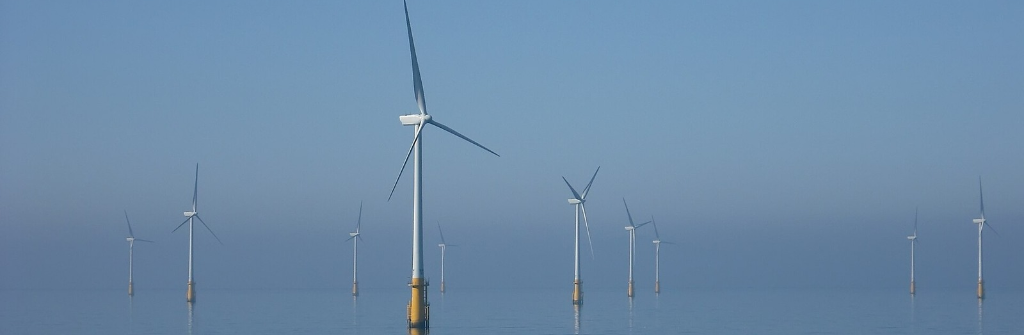
“File:Barrow Offshore wind turbines NR.jpg” by Andy Dingley, edit Muhammad is licensed under CC BY-SA 3.0.