
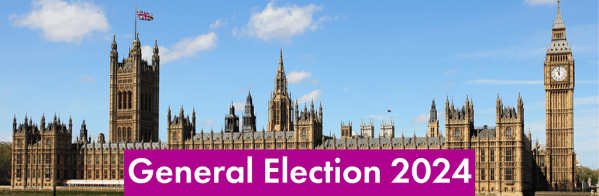
On 22 May 2024, Prime Minister Rishi Sunak announced that the UK Parliament will be dissolved on 30 May 2024 and a general election will take place on Thursday 4 July 2024. This blog is the second in the ‘General Election 2024’ series. It explains what dissolution means and how it affects parliamentary business and government activity.
What is the dissolution of the UK Parliament?
The period of parliamentary time between one UK general election and the next is called a ‘Parliament’. A Parliament is made up of ‘Sessions’ which are usually a year long and run from spring to spring. In contrast, at the Scottish Parliament the period of time between general elections is called a ‘Session’. A Scottish Parliament Session is made up of ‘Parliamentary Years’ beginning on the date of the first meeting of the Parliament following a general election and on subsequent anniversaries of that date within the Session.
The end of a UK Parliament is called ‘dissolution’. Under the Dissolution and Calling of Parliament Act 2022, the UK Parliament can be dissolved in two ways:
- Parliament can be dissolved by King Charles III using prerogative powers, which are exercised on the advice of the Prime Minister. Dissolution takes place by Proclamation under the Great Seal.
- Automatic dissolution at the beginning of the day that is the fifth anniversary of the day on which it first met (if the Parliament has not been dissolved prior to this as explained above). Under this rule, Parliament would have dissolved on 17 December 2024.
The Dissolution and Calling of Parliament Act 2022 repealed the Fixed-term Parliaments Act 2011. Under the 2011 Act, general elections to the UK Parliament had to take place by default in May every five years and Parliament would automatically be dissolved 25 working days before polling day. It was also possible to trigger an early election through a vote of no confidence in the Government or a vote for a general election.
In his announcement, the Prime Minister stated that His Majesty King Charles III had granted the request to dissolve the UK Parliament on 30 May 2024. Dissolution triggers a UK general election 25 days later (not counting weekend days and some bank holidays), which means that the UK general election will take place on 4 July 2024. See a House of Commons Library briefing for more information on dissolution of the UK Parliament.
After dissolution ‘writs’ are issued to returning officers who are responsible for running elections in each constituency. Writs are legal documents authorising, in this case, the holding of a UK general election. Writs are considered to be delivered the day after dissolution.
What happens to parliamentary business?
After the Prime Minister’s announcement, the UK Parliament went into ‘wash-up’, which is a period of time before dissolution when it continues to sit and tries to pass remaining legislation. The UK Parliament prorogued on 24 May 2024 which brought the end of the UK Parliament Session. The King formally prorogues Parliament on the advice of the Privy Council and prorogation is marked by a ceremony in the House of Lords Chamber. Prorogation means that both Houses stop sitting and considering legislation. UK Parliament bills which are not passed by dissolution fall (do not proceed further).
This has implications for some bills considered in the UK Parliament for which the Scottish Parliament has been asked for its consent under the Sewel Convention. These are bills which contain ‘relevant provision’ – provision applying to Scotland for any purpose within the legislative competence of the Scottish Parliament or which alters that legislative competence or the executive competence of the Scottish Ministers. Find out more about legislative consent in a SPICe fact sheet .
The following bills for which legislative consent was sought from the Scottish Parliament were not passed before dissolution:
Bill title | Legislative Consent Memorandum(s) lodged by Scottish Government | Consent recommendation in memorandum | Relevant motion |
Consent recommended | |||
Consent recommended | |||
Consent recommended | |||
Consent not recommended | |||
Consent recommended |
What happens to MPs now?
When the UK Parliament is dissolved, MPs automatically cease to be MPs, which means that they lose their seats. If they want to become an MP again they must stand at a UK general election. The House of Lords does not sit during dissolution and their Lordships will return when Parliament is in session.
The next Parliament will have 57 Scottish seats in the House of Commons, down from 59. This is because changes have been made to many constituency boundaries that will be used for this UK Parliament general election. Information on the boundary review that recommended the boundary changes in Scotland is provided by the Boundary Commission for Scotland.
How does the pre-election period affect government activity?
The pre-election period is a period of heightened sensitivity (in the past often referred to as ‘purdah’). During this time, the activities of governments and local authorities are restricted to ensure that public money is not used for party-political purposes.
The UK Government remains in place until a new government is formed after the general election, but it must take special care in making controversial announcements or taking decisions in areas where a new government may want to take a different approach. See a House of Commons Library briefing for information on different types of restrictions for governments, civil servants, local authorities, and MPs.
There are no specific restrictions on the activities of Scottish Ministers who continue to carry out their functions in line with the Scottish Ministerial Code. On 27 May 2024, the Permanent Secretary to the Scottish Government, did however write to the First Minister providing advice on planned Government business during the pre-election period. The letter states:
I consider there to be a clear case for deferral of strategic policies due to be published in the pre-election period, given this could influence the General Election.
The letter states that this affects the following strategic policies:
- the Programme for Government and associated legislative programme (scheduled for the week commencing 10 June 2024)
- the Medium Term Financial Strategy and associated documents (scheduled for 20 June 2024)
- remaining papers scheduled in the Building a New Scotland series
- the Energy Strategy, Just Transition Plan, and oil and gas policy publications.
The letter from the Permanent Secretary also states:
Further to the above, I can confirm that essential Government business should and will continue, ensuring Civil Servants deliver on your Government’s priorities consistent with the pre-election guidance. This includes progressing legislation already introduced to the Scottish Parliament, and legislation which the Scottish Government has already announced it intends to bring forward. Parliamentary business will continue as planned, and the Civil Service will continue to provide briefings and advice to Ministers for PQs, correspondence, visits, statements and debates each week.
Guidance on the conduct of Scottish Government civil servants took effect from 25 May 2024. The guidance includes information on Ministerial visits, announcements, public consultations, use of public funds, and public bodies. It states:
Civil servants should not undertake any activity which could call into question their political impartiality or give rise to the criticism that public resources are being used for party political purposes. Application of this principle needs to be considered particularly carefully during election periods.
SPICe Research